


This is the day America celebrated its first national Thanksgiving Day in 1789.
In today’s lesson, we will look at how a moment in early American history invites us to consider the kind of leadership that points people toward gratitude anchored in God. What changes when a leader chooses thankfulness in fragile times rather than triumphant ones. How might the posture of gratitude open a way for us to lead with steadier hearts in our own lives.

“Give thanks in all circumstances; for this is God’s will for you in Christ Jesus.” - 1 Thessalonians 5:18 (NIV)

This Date in History
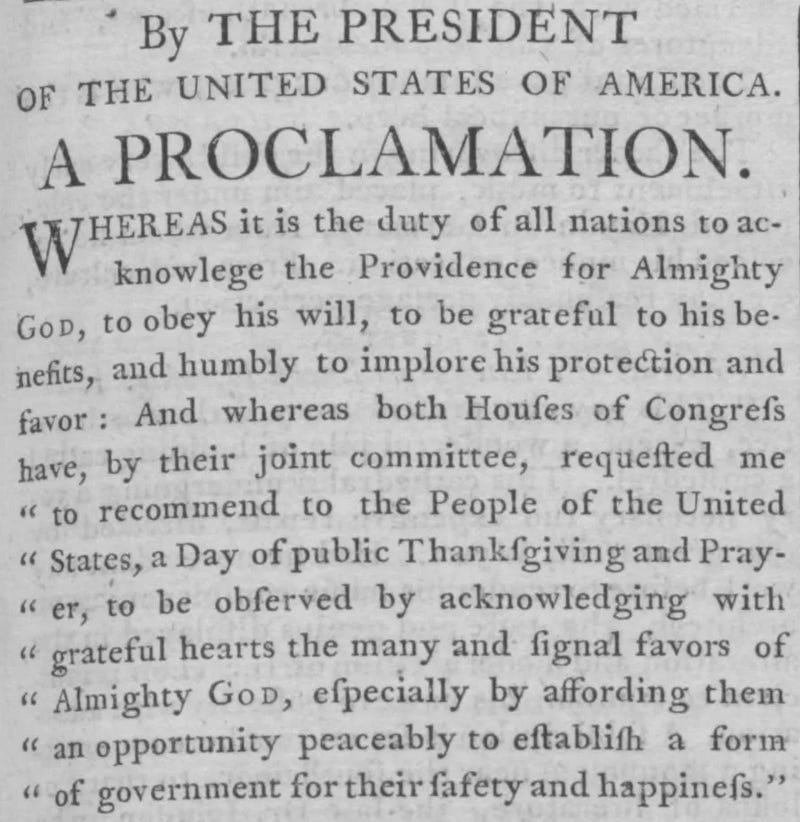
On October 3, 1789, President George Washington walked into Federal Hall in New York City to issue a document that would mark a pivotal moment in American history, the first national Thanksgiving proclamation. Crafted at the behest of Congress, the proclamation called for a day of public thanksgiving and prayer, uniting the fledgling nation in gratitude and reflection. This act transformed scattered local and regional thanksgiving traditions into a shared national observance and set the stage for a uniquely American holiday.
The idea originated earlier that year when New Jersey Representative Elias Boudinot proposed a resolution asking Washington to declare a national day of thanksgiving. The timing was significant. The United States, only recently independent, had ratified its Constitution and elected its first president. The resolution encouraged Americans to pause and reflect on their achievements and blessings as a nation. Some congressmen questioned whether the federal government had the authority to declare such observances, yet Boudinot’s proposal prevailed.
While many Americans today associate Thanksgiving with the 1621 harvest celebration of the Plymouth Pilgrims, thanksgiving observances had long existed in various forms across the colonies. These days of gratitude were typically proclaimed by religious or civil authorities to mark specific events such as military victories, successful harvests, or the end of droughts. During the Revolutionary War, the Continental Congress issued several thanksgiving proclamations, encouraging prayer and gratitude for pivotal victories like the Battle of Saratoga. These practices prepared the way for Washington’s broader, more inclusive proclamation.
Washington’s 1789 proclamation was notable for its scope and intent. Rather than focusing on a single event or region, it called on all Americans to express gratitude for the peaceful ratification of the Constitution, the freedoms they enjoyed, and the favorable interpositions of providence that had guided the nation through a tumultuous revolution. It also set the specific date for the national observance, naming Thursday, November 26, 1789, as the day when Americans should gather for public thanksgiving and prayer. The document encouraged citizens to seek forgiveness for national transgressions and to pray for the continued protection and prosperity of the United States.
Public response was generally positive. Across the country, churches held special services, and communities organized feasts and gatherings. In New York City, Washington attended services at St. Paul’s Chapel, a quiet gesture that underscored the spiritual dimension of the day. He also demonstrated personal commitment to the spirit of the proclamation by donating funds to aid imprisoned debtors.
The proclamation reflected Washington’s vision of a united nation that balanced civil governance with shared values and traditions. By encouraging collective gratitude and reflection, it helped foster a sense of national identity at a crucial time in American history. Although the national Thanksgiving proclaimed by Washington did not become an annual tradition, his proclamation set a precedent for future presidents. John Adams and James Madison would issue similar proclamations during their terms.
The impact of Washington’s 1789 proclamation extended through American history. It provided a foundation for Thanksgiving’s eventual establishment as a recurring national observance. Nearly seventy five years later, during the Civil War, Abraham Lincoln drew on this precedent when he proclaimed a permanent annual Thanksgiving holiday in 1863, an effort to unite the country during its greatest internal conflict.
Washington’s proclamation celebrated the achievements of the young republic and underscored the importance of collective gratitude in shaping a shared national ethos. In doing so, it laid the groundwork for a tradition that continues to hold cultural and historical significance for Americans to this day.
Historical Context
In the late 1780s the United States was navigating a major transformation of governance and national identity. The newly adopted Constitution had just taken effect in March 1789, replacing the weak Articles of Confederation and setting a stronger federal structure in place. The first Congress faced urgent tasks: creating federal institutions, managing war debt, and forging a sense of unified nationhood among thirteen distinct states. This moment of state-building, combined with a recent victory in the Revolution and the establishment of peace with Britain in 1783, created fertile ground for a symbolic national observance of thanksgiving. Recognizing that neither the states nor the federal government alone would suffice to generate common civic culture, the proclamation of a national day of thanksgiving in November 1789 was both a rhetorical and political effort to reinforce the union and legitimize the new regime.
On the cultural front Americans in 1789 held deeply religious worldviews, with public prayer and thanksgiving well embedded in colonial and revolutionary practice. Communal observances of gratitude were common in New England and among Protestant denominations, and the idea of a national day of prayer appealed to shared religious sensibilities even as notions of church-state separation began to surface. At the same time the printing press and newspapers—still in their relative infancy—helped spread presidential proclamations to distant frontier settlements, giving ordinary citizens access to national-level messaging. The invitation to observe a common day of thanksgiving served not only spiritual functions but also worked to weave a national narrative: citizens responding together, offering thanks, and reaffirming their membership in the union. The practice foreshadowed how ritual observances would contribute to American civic identity in the 19th century.
Did You Know?
When George Washington signed the proclamation for Thursday, November 26, 1789, he sent copies to each of the then-thirteen state governors and asked them to encourage observance in their jurisdictions.
The original manuscript of Washington’s 1789 Thanksgiving Proclamation disappeared from public view for more than a century until archivist J. C. Fitzpatrick rediscovered it in 1921 while reviewing the papers of Tobias Lear, the longtime personal secretary and trusted aide to George Washington.
A handful of opponents in Congress argued that a national day of thanksgiving ought to be a matter for the states, not the federal government, raising early questions about federal power and religious observance.
Thomas Jefferson declined to issue a national thanksgiving proclamation during his presidency because he believed the federal government should not intervene in religious practice—a sharp contrast with his earlier role as governor of Virginia, where he had proclaimed such days.
While the 1789 proclamation did not establish a permanently recurring holiday, it served as the precedent later drawn upon by Abraham Lincoln when he proclaimed a national Thanksgiving observance in 1863 during the Civil War.
Today’s Reflection
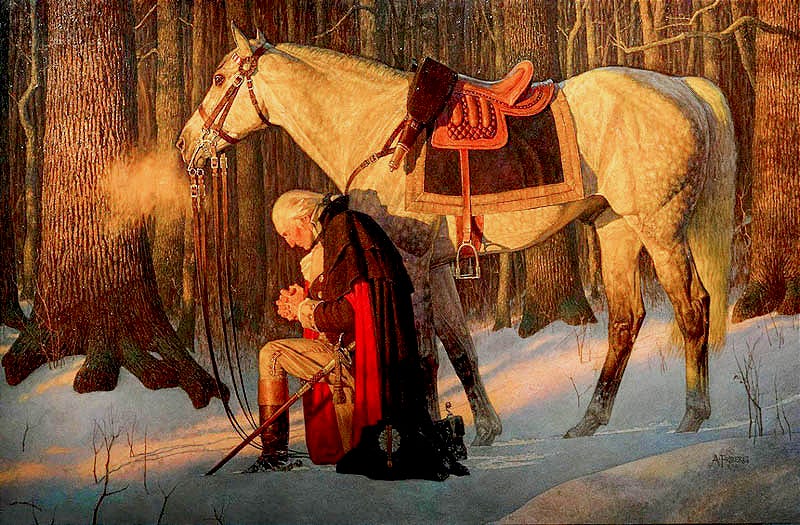
Leadership tests the character of those who bear its weight, revealing not only how they guide others but whom they ultimately trust. When George Washington issued America’s first national Thanksgiving proclamation, he showed that leadership shapes more than policies. It shapes hearts. Instead of drawing attention to military victories or his own rise to the presidency, he directed the nation’s attention toward God. While Washington was not a biblical figure and his authority is not spiritual in the way Scripture describes, his posture still illustrates a timeless truth: a leader who understands where true authority rests will naturally direct others toward gratitude.
Throughout Scripture, godly leadership points people toward thanksgiving. Moses led the Israelites in songs of praise after the Red Sea. David appointed Levites to give thanks before the ark of God. Nehemiah organized celebrations of thanksgiving when the walls of Jerusalem were completed. These leaders understood what Washington later demonstrated, that gratitude is not only a personal virtue. It is a collective discipline that must be taught and modeled. At the heart of their leadership was confidence in God’s character—His power, His faithfulness, His steadfast love—which made gratitude not just appropriate but inevitable.
“Give thanks in all circumstances, for this is God’s will for you in Christ Jesus.” 1 Thessalonians 5:18 (NIV)
Paul wrote these words not only to individuals but to the entire church in Thessalonica. Leaders within that community were responsible for shaping an atmosphere where gratitude could grow, especially during hardship. Gratitude is not seasonal, and it is not situational. It flows from a settled belief that God is present and working even when His purposes are hidden. It is cultivated by leaders who help others see God’s goodness even when life feels uncertain.
Washington understood something similar. The nation had survived a difficult war and was struggling through the fragile beginnings of self-governance. The Constitution was newly ratified. Political divisions were forming. The future was unsettled. Yet he paused and called the nation to give thanks. His timing echoed Paul’s encouragement to the Thessalonian church, which faced persecution and confusion. Leadership in fragile moments often reveals whether a leader will amplify fear or guide people back to the One who remains steady.
“You became imitators of us and of the Lord, for you welcomed the message in the midst of severe suffering with the joy given by the Holy Spirit.” 1 Thessalonians 1:6 (NIV)
Gratitude during easy seasons is natural. Gratitude during difficult seasons is supernatural. It requires leadership that points toward the steady goodness of God rather than the instability of circumstances. Not all leaders do this well, and Scripture itself is honest about failed leaders—but those who anchor themselves in God help others do the same.
Today’s leaders face similar opportunities. Parents, pastors, teachers, supervisors, and community guides all influence the emotional and spiritual climate of the spaces they oversee. A leader’s choice to practice gratitude shapes the environment of an entire home, classroom, workplace, or congregation.
A parent who begins the day by naming simple blessings teaches children to see grace where others see routine. A warm meal, a safe home, or a moment of laughter becomes a gentle reminder of God’s faithfulness. These daily habits form spiritual memory in a child’s heart long before they understand theology. Gratitude becomes the lens through which they learn to see their world. It trains them to recognize God’s hand in both the spectacular and the ordinary.
In the workplace, a supervisor who expresses appreciation creates more than morale. They create belonging. Gratitude acknowledges the value of a person, not just their contribution. When a leader notices effort, speaks encouragement, or offers sincere thanks, employees respond with trust and commitment. The workplace becomes a place of purpose rather than pressure, and gratitude becomes a quiet ministry that dignifies everyone involved. Even in secular environments, gratitude can serve as a witness to the kindness of God at work in ordinary relationships.
A teacher who opens the day by sharing one thing they are thankful for gives students more than positivity. They give them perspective. Gratitude becomes a way of seeing life with humility instead of entitlement, wonder instead of boredom. These early practices shape character in ways that last long after the school year ends.
In the church, pastors and ministry leaders set the tone for how congregations interpret hardship. Public prayers of thanksgiving, testimonies of God’s provision, and reminders of God’s presence during sorrow help believers anchor their hope. Gratitude during suffering does not deny pain. It acknowledges that God is still at work in the middle of it. Such leadership invites people to trust God’s heart even when they cannot trace His hand.
“When the righteous thrive, the people rejoice.” Proverbs 29:2 (NIV)
Gratitude creates the kind of leadership that allows people to thrive. It steers hearts away from fear and toward trust. It teaches communities to look beyond what is fragile and cling to what is eternal. Where gratitude flourishes, anxiety loosens its grip, and God’s faithfulness becomes easier to recognize.
Washington’s proclamation reflected this kind of leadership. He called the nation to give thanks for religious liberty, civil government, and divine protection. He urged citizens to ask forgiveness for national sins. His words echoed Paul’s instruction to combine every petition with thanksgiving. Though his role was political rather than pastoral, his humility offers a helpful picture of how leaders can direct people toward God rather than toward themselves.
“Do not be anxious about anything, but in every situation, by prayer and petition, with thanksgiving, present your requests to God.” Philippians 4:6 (NIV)
Thanksgiving is not the absence of need. It is the acknowledgment of God’s nearness. Leaders who embrace gratitude lead others into that same confidence. They remind those they serve that God’s faithfulness is not theoretical—it is lived, remembered, and celebrated.
The legacy of Washington’s example remains. Gratitude still strengthens homes. It still steadies churches. It still softens workplaces. It still unites communities. Your leadership, wherever you serve, carries the same potential. When you choose gratitude, you create space for others to encounter God’s faithfulness.
Leadership becomes worship when it points people toward the Giver of every good gift. May we cultivate hearts that see God at work in every season, and may our leadership—however large or small—lead others to pause, reflect, and give thanks to the One who holds our lives with steady hands.

Practical Application
Take ten quiet minutes today to name three specific blessings from the past twenty-four hours and speak them aloud to God. Do not list vague categories. Identify concrete gifts that required attention to notice. This act retrains your heart to see God’s presence in ordinary moments and interrupts any default toward worry or complaint. Practicing gratitude in this simple, deliberate way forms the kind of inner posture that steady leaders cultivate long before they influence anyone else.
Closing Prayer
Heavenly Father, thank You for the steady kindness You extend to us in every season. We come before You as a people who have received far more than we deserve, grateful for the homes that shelter us, the meals that strengthen us, and the relationships that enrich our lives. Teach us to see Your hand in every good gift, from the quiet mercies woven into our ordinary days to the abundant blessings that remind us of Your generosity. Shape our hearts to recognize the grace You pour out on families, communities, and nations, and help us to respond with humility and joy. Form in us a spirit that remembers Your goodness, speaks encouragement, and reflects Your character in all we do.
Deepen our gratitude so it becomes a steady rhythm in our lives rather than a response to a single moment. Help us acknowledge the ways You have carried us through difficulties, provided for us in uncertainty, and surrounded us with love that sustains us. Teach us to cherish the people You place in our lives and to offer thanks for the memories, the conversations, and the moments of grace that reveal Your presence. Strengthen our resolve to give thanks in every circumstance, trusting that Your faithfulness does not falter and Your presence does not change. In Jesus’ name we pray. Amen.
Final Thoughts
Gratitude is more than an emotion; it is a posture that reshapes the entire landscape of our lives. When we choose to notice the gifts God places in front of us, we train our hearts to trust His character more than our circumstances. This kind of gratitude forms a quiet strength that radiates through every environment we inhabit. It steadies families, shapes workplaces, and nurtures congregations because it shifts attention away from fear and toward God’s enduring faithfulness. True gratitude is an act of discipleship, a deliberate turning of the heart toward the One who is always present and always good. When believers practice gratitude consistently, they become living reminders of God’s nearness, and their lives invite others to do the same.
If you’ve made it this far down the page can you do me a favor? Let me know what you thought about today’s newsletter. Leave a comment or like (❤️) this post. I would really appreciate it. If you’d like to support our work here you can make a one-time donation through Stripe right here.
This piece first appeared on the same date one year ago. I occasionally share reposts because daily writing takes endurance, and some truths deserve to be heard more than once. The version you just read has been lightly refined and updated for content and clarity. My hope is that encountering it again today will speak to you in a fresh and timely way.

Great essay, thanks for working in the Battles of Saratoga. We are very proud of our ties to Thanksgiving.
I love your focus on the importance of gratitude in our daily lives. I too have seen morale and culture shaped by leaders at church and school who found ways to make gratitude a practice both individually and corporately.