


This is the day A Charlie Brown Christmas first aired on CBS television in 1965.
In today’s lesson, we will explore how Scripture calls us to resist the pull of a world that defines Christmas by abundance rather than by truth. What happens when the desires around us grow louder than the message within us. And how do we turn our attention back to the One whose arrival gives the season its meaning.

"Then he said to them, 'Watch out! Be on your guard against all kinds of greed; life does not consist in an abundance of possessions.'" - Luke 12:15 (NIV)
This Date in History
As darkness settled across American living rooms on December 9, 1965, a quiet revolution unfolded on CBS screens. Families gathered around their televisions, expecting the usual festive cheer of animated specials, yet what they witnessed was something different, a gentle, jazz-scored meditation on the meaning of Christmas that stood in deliberate contrast to the noise of the season. No laugh tracks punctuated the dialogue and no flashy commercial jingles interrupted the flow. Instead, Charles Schulz’s humble story of Charlie Brown’s search for something real drifted across the airwaves with the calm of a winter evening, inviting viewers to consider the weight of a holiday that had grown crowded with glitter and pressure. CBS executives had already predicted that the special would falter, convinced that viewers would not respond to its plainspoken sincerity or deliberate pacing. The stakes were high, the risk unmistakable, and in that moment history was being made for television and for the soul of Christmas itself.
The origins of A Charlie Brown Christmas trace back to Schulz’s Peanuts comic strip, a cultural force that had captivated readers since its debut in 1950. By the mid-1960s, Peanuts appeared in thousands of newspapers across dozens of countries, and its familiar cast of Charlie Brown, Snoopy, Lucy, and Linus had become fixtures of American life. When Coca-Cola approached Schulz and producer Lee Mendelson about creating a Christmas special, the conversation moved quickly. Schulz, Mendelson, and animator Bill Melendez sketched the entire storyboard in a single day, a pace unheard of for national broadcast projects. The schedule only intensified from there. The team had roughly six months to turn that rough outline into a finished animated film, and they delivered the completed special to CBS just ten days before its premiere.
From the start, Schulz’s vision resisted compromise. He insisted that the program speak plainly about the true meaning of Christmas, and he believed the Nativity account from the Gospel of Luke belonged at the heart of the story. Network executives questioned the decision. They worried that a sudden shift into scripture would alienate viewers, and they disliked the idea of removing the laugh track that typically accompanied animated programming. Schulz remained firm, convinced that Christmas had become too easy to misunderstand and that children could absorb far more depth than television usually offered them. For him, the message mattered more than convention. He wanted the special to offer clarity, not noise, and he believed viewers would recognize the sincerity behind it.
The production process revealed how unusual the project truly was. Schulz’s decision to cast real children instead of trained adult voice actors created challenges throughout the recording sessions. Several young performers could not yet read fluently, so the team coached them line by line to preserve the natural hesitations and rhythms that defined the Peanuts world. Peter Robbins brought Charlie Brown’s anxious sincerity to life, and Christopher Shea shaped the quiet confidence of Linus, delivering the Nativity reading with a steadiness that surprised everyone in the studio.
Vince Guaraldi’s jazz score added another layer of creative risk. Guaraldi composed much of the music before the animation was finished, working from concept sketches and rough cuts rather than completed scenes. His trio recorded the tracks in only a few sessions, shaping the warm, understated feel that would come to define the special. The network feared that the cool swing of “Linus and Lucy” or the soft melancholy of “Christmas Time Is Here” would confuse children, yet Schulz and Mendelson believed the music would give the story its soul. Snoopy’s dance sequences were even animated around Guaraldi’s rhythms, creating a lively interplay between sound and movement that felt spontaneous and fresh.
The visual style carried the same spirit. Melendez resisted the temptation to smooth Schulz’s iconic line work, choosing instead to preserve the hand-drawn imperfections that gave the strip its character. The sparse backgrounds, simple transitions, and measured pacing all reflected Schulz’s commitment to minimalism. Nothing was added for spectacle. Everything served the quiet, reflective atmosphere he wanted families to feel.
When A Charlie Brown Christmas finally aired, it drew more than fifteen million viewers and nearly half of the national television audience. CBS, which had braced for embarrassment, found itself stunned by the response. Newspapers across the country published praise the next day, calling the special honest, gentle, and brave. Letters poured in from viewers who felt moved by the reading from Luke and grateful that the story offered something more than commercial cheer. The following year the special won an Emmy for Outstanding Children’s Program and received a Peabody Award for what the board described as a thoughtful and faithful presentation of a timeless message.
What began as a doubtful experiment became a cherished tradition. CBS aired the special annually for decades until ABC acquired the rights in 2000. It has continued to air every year since its debut and now stands as one of the most beloved holiday broadcasts in American history. Generations have grown up watching Charlie Brown discover that meaning is found not in aluminum trees or spectacle but in the simple truth that Christmas rests on the birth of Christ.
At its core, A Charlie Brown Christmas remains more than an animated special. It is a quiet act of conviction, a reminder that beauty often comes through simplicity, and a declaration that the hope of Christmas rests not in the trappings of the season but in the light that entered the world and still shines.
Historical Context
By the mid 1960s television had become the primary medium shaping American life, with the three major networks reaching tens of millions of homes and influencing national conversations in real time. Rapid growth in broadcast technology and a booming postwar economy helped transform television into a cultural gatekeeper, especially during holiday seasons when advertisers invested heavily in programs that promoted consumer spending. At the same time many Americans were experiencing unease about the increasing commercialization of Christmas. The growth of suburban shopping centers, aggressive marketing strategies, and the rise of Christmas themed retail campaigns intensified public concern that the holiday’s spiritual meaning was being overwhelmed by material expectations. These forces created a moment in which a program that resisted commercial pressures could stand out sharply against the dominant trends of the era.
Culturally the early 1960s had also shifted national conversations about the role of faith in public life. Supreme Court decisions on prayer in schools ignited widespread debate about how religion should appear in shared civic spaces, including television. Audiences were negotiating a tension between longstanding Christian traditions and a rapidly modernizing society that often favored secular expressions. Meanwhile newspaper comic strips were reaching unprecedented levels of influence. Peanuts in particular had gained a reputation for treating children as thoughtful and capable of understanding emotional and philosophical themes. This combination of cultural authority, spiritual searching, and growing appetite for authentic storytelling created ideal conditions for a quiet, scripture centered Christmas special to resonate on a national scale.

Did You Know?
The comic strip behind the show, Peanuts, had begun in just seven newspapers in 1950, showing how far it had come by 1965 when the special aired—a rise that underlined how deeply Schulz’s characters had entered American popular culture.
The term “Charlie Brown Christmas tree” entered American vocabulary after the special aired, becoming shorthand for a sparse, drooping, or imperfect tree. The affection for this humble style grew over the decades, eventually leading retailers to sell deliberate replicas complete with a single red ornament.
The familiar jazz standard “Linus and Lucy” was originally recorded in 1964 for an unaired documentary about the Peanuts strip, before being adopted for the 1965 Christmas special.
The soundtrack album for A Charlie Brown Christmas has sold over five million copies, making it the second–best-selling jazz album ever. The soundtrack routinely re-entered the music charts each holiday season, introducing generations of young listeners to modern jazz they might otherwise never have encountered.
The children’s choir heard on “Christmas Time Is Here” and “Hark! The Herald Angels Sing” was drawn from a parish church in San Rafael, California (not a professional studio chorus).
Today’s Reflection
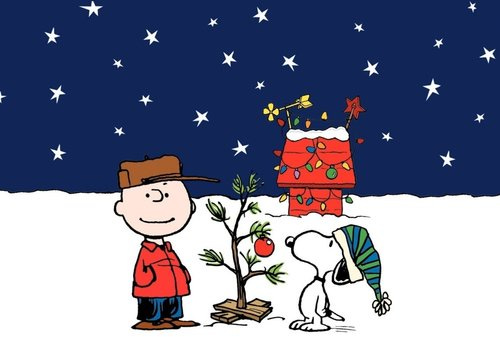
The sight of Charlie Brown standing before his friends, questioning the glittering aluminum trees and the commercialization of the season, reflects a tension we all feel during the holidays. We live in a world that urges us toward bigger, brighter, and more, and that pressure often chokes out the simplicity of what Christmas is meant to celebrate. In the noise of the season, it becomes remarkably easy to forget that Christmas is not built on perfection or performance. It is built on the birth of Christ. Like Charlie Brown, we find ourselves pulled between the shine of the world and the quiet truth of Bethlehem.
“Watch out! Be on your guard against all kinds of greed; life does not consist in an abundance of possessions.” Luke 12:15 (NIV)
Jesus’ warning speaks directly into the kind of Christmas our culture sells. Every advertisement urges us to measure joy by what we buy. Every expectation tells us that more is better. Every voice seems to say that the value of the season rises or falls on how much we can produce. Yet Jesus calls us back to the truth. Life is not found in what we accumulate. Life is found in Him.
Charles Schulz understood the danger of a Christmas hollowed out by commercial excess. His choice to include the reading of the Nativity in A Charlie Brown Christmas was not a sentimental flourish; it was a theological decision. When the world was drifting toward a hollow holiday, he chose to place Scripture at the center of his story. He believed children were capable of hearing truth. He believed families needed to hear it. And he was willing to risk criticism in order to let the gospel speak plainly.
Charlie Brown’s small, fragile tree captures that message in a simple but powerful way. It looks inadequate beside the bright aluminum forest. It looks like it will collapse under the weight of a single ornament. In the eyes of the world, it is not enough. Yet something happens when love touches the branches. The tree becomes a symbol of what God often chooses to do. He takes what looks weak, and He fills it with meaning. He takes what seems too small, and He uses it to reveal His heart. The manger in Bethlehem carried the same lesson. Christ arrived in a place the world overlooked. Yet His entrance changed everything.
“Why spend money on what is not bread, and your labor on what does not satisfy?” Isaiah 55:2 (NIV)
Isaiah’s question confronts us with a truth we often avoid. Our efforts to make Christmas impressive can leave us empty. Our desire to meet every expectation can drain the joy from the season. We can work so hard to make the holiday meaningful that we forget the One who gives it meaning in the first place. The invitation of Scripture is simple. Stop chasing what cannot satisfy. Come to the One who can.
This is why the special endures. It has a way of cutting through the distractions and pointing us back to the simplicity of the gospel. When Linus steps forward and recites the Nativity story, the noise quiets. The posturing stops. The truth stands on its own. That moment reminds us that Christmas does not need our embellishment. It needs our attention. It needs our worship.
“Set your minds on things above, not on earthly things.” Colossians 3:2 (NIV)
Paul’s words give us a clear path. Lift your eyes. Shift your focus. Let your mind rest on what lasts. When Christ becomes the center of our celebrations, the season finds its balance again. The gifts find their purpose. The traditions find their place. The pressure loses its grip.
So this Christmas, let Charlie Brown’s frustration become your invitation. Let it push you toward a simpler, clearer, more worshipful celebration of Christ. Let it remind you that the Savior who came quietly still comes to meet us in the quiet places of our lives. And let it draw you toward a Christmas shaped not by what the world demands, but by the One who came to save it.

Practical Application
Take time this week to evaluate your Christmas preparations and celebrations. Create a simple list of your holiday activities and purchases, then thoughtfully consider which ones truly celebrate Christ's birth and which might be driven by commercial pressure or worldly expectations. Choose one meaningful way to redirect some of your holiday resources—whether time, money, or energy—toward celebrating Christ's birth through worship, service, or sharing the gospel message with others.
Closing Prayer
Heavenly Father, thank You for giving us a Savior who entered the world with humility and grace, inviting us to rest in what is true rather than what is loud. Teach us to resist the pull of commercialism and the habits that turn our eyes from Christ, and center our hearts on the miracle of His coming. Give us wisdom to discern what truly matters in this season, the courage to share the good news of Christ’s birth with boldness and grace, and the strength to let our words and actions point others toward the hope found in Him. Shape our desires so they reflect Your heart, and let the beauty of Christ’s arrival steady and renew us. In Jesus’ name we pray. Amen.
Final Thoughts
The heart of Christmas has never been found in what we create for ourselves, but in what God has already given. The noise of the season pulls us in countless directions, yet the gospel calls us to return to the manger with uncluttered attention and unhurried faith. When we set aside the expectations that exhaust us, we discover the deeper truth that Christ came to bring rest, meaning, and renewal. A life shaped by His arrival is not driven by perfection or performance, but by worship that grows from gratitude. The world will always offer reasons to chase more, but the Spirit invites us to receive what is already ours in Christ. The season becomes clear again when the Savior stands at the center, holding our focus and reshaping our joy.
Community Engagement
Share your thoughts or use these questions to get the conversation started.
What's your earliest memory of watching "A Charlie Brown Christmas"?
How do you maintain focus on Christ's birth during the busy holiday season?
What steps could you take to simplify your Christmas celebrations this year?
How might we use cultural platforms today to share the gospel message, as Schulz did through animation?

This devotional is free to read. You can support this publication by becoming a subscriber, upgrading to paid subscriber status, liking (❤️) this post, commenting, and/or sharing this post with anyone who might enjoy it. You can also make a ONE-TIME DONATION in any amount. Thank you for your support!
In tomorrow's lesson, we'll explore how one of history's most powerful figures found glory not through force, but through the pursuit of peace. This surprising story challenges us to reconsider our understanding of true strength and the delicate balance between power and diplomacy.

Thanks for the sharing the history of this iconic video that, apparently, almost never was. This was definitely part of my husband's childhood tradition, and we have shared with our children. Now I am excited to find a night to watch with them this season.
1. Reminders of home, a strong iconic connection to my parents
2. Definitive choices to show manger scene images in Christmas decor, clothing etc. Sharing the Luke story of Jesus' birth with children and adults.
It's OK to celebrate joys of God's Creation: seasonal beauty, manmade traditions as long as we acknowledge, prioritize and thank God as the Creator of all and that Jesus is the Son of God sent to earth to be our Master Teacher of Truth, usher in the New Covenant and atone for all humanity's sins.
Same for Easter! Celebrate the beauties of Spring and share the meaning of Christ's Resurrection. Again, sharing Matthew, Luke and John so that people read for themselves to KNOW the Truth and Believe.
(Mark is shortest, Matthew Luke and John include vital details)
Remember: NO judgement - only God is the ultimate judge. It's not our job.
Condemnation or snubs of secular holiday joy serve to turn people off in times where the real story of Jesus is very much needed, but suppressed.